Wednesday, September 29, 2010

Bloomington Water Conservation Plan

What is Water Conservation?
Historically water conservation was in response to droughts and water shortage emergencies.  Today it has expanded to be part of a long-term strategy to meet water demands, protect water quality and to be responsible and be wise about how to use a finite resource.  


Bloomington has only one water source which is the Lake Monroe Reservoir.  This means that the Lake  and water use needs to carefully monitored, since it's the one water source we depend upon.  I think the plan has a lot of good goals, focusing on economic incentives; government regulation; water management; alternative supply; and public education. Energy usage and water consumption are closely related and energy and water utilities should work together on conservation plans. A major current concern is how the drought is affecting the water level of the lake and what it will be mean for citizen's water usage.  The drought has effected the water level of the lake but the water level decrease is more noticeable at Griffy Lake. 


It was interesting to note the difference in water usage between the school year and then during the summer. There is a increase in water usage due to students.  I didn't think about how big of an impact the school has on Bloomington as a whole. A difficult factor in dealing with water limits and amount the city regularly uses is that the population of Bloomington changes. The city "blooms" gets an influx of people during August and September and then the population declines during the summer months.  


I noted like skimming this document that the Bloomington Water Conservation Plan talks about using water rates as a conservation tool to encourage residents  and businesses to be water wise. Increasing water rates was one of the BCOS' water committee initiatives.  


This is a not connected to the reading but I wanted to comment that, I have been boating out on Lake Monroe and after viewing the water all I can say is that we must have a very good water treatment/filtration facility, because the water looked pretty dirty and undrinkable (partly due to what I have seen fall into the lake).  But that is not the say that don't drink tap water I do. I enjoy tap water versus bottled water.   

Sunday, September 26, 2010

Water Water Everywhere but Not a Drop to Drink

Roseland Chapter 5

In this chapter Roseland discusses the ways we have manipulated natural waterways (such as dams) and how we handle our sewage and re-use water.   The main focus of the chapter though was discussing the may ways we pollute water and effectiveness of the systems we have to treat and clean the water.  We pollute water with sewage from cities, agriculture and factories. Water is a renewable resource but we can cannot always use it like it is, especially in times of drought.  There are many actions and behavior changes people can do to use less water.  Some actions are to buy facet aerators and lo-flow shower heads because they will reduce the flow of water. A behavior changes are to take shorter showers (around 5 minutes).

 Indiana is in a drought so we have to change how much water we use. Most water users pay a flat rate instead of payer per volume so they don't realize the actual cost of water they consume.  The BCOS on the topic of water was planning on having the county increase water rates in Bloomington.  I think the goal of increasing the water cost rate was to influence the amount of water people use and hopefully have people use less due to the drought. The drought in Indiana is causing the lakes and rives to dry up but it is also affecting agriculture and the dry fields can be a fire hazard.  I read this new report about a farm in Indiana that went up in flames due to current drought conditions.  Fire bans are currently in effect in several cities.  Below ins a link news video report on a field fire.


Millennium Ecosystem  Assessment Synthesis Report: Wetlands and Water
Millennium Ecosystem Assessment: Wetlands and Water

This report goes into detail on the current status of wetlands and other bodies of water on earth, explains how wetlands are vital to humans well-being and stressing the importance of "wise use" of wetlands and water.   I had not realized how much of a service wetland ecosystems provide use.  Wetland ecosystems, including lakes, rivers, marshes and coastal areas contribute to human well-being and poverty alleviation.   Wetlands ecosystems provide people with out basic needs of drinkable water and food (fish and other seafood) and water availably  for agriculture, bathing, washing and cleaning. Earth would not be inhabitable without water so we need to keep our water ecosystems healthy so we can maintain our lifestyle and for the health of the rest of earth's inhabitants (flora and fauna). There are some major issues with humans degrading wetlands and other water ecosystems by pollution and land alternation (such as by farming and city infrastructure).  It was interesting to find out that of the types of wetland ecosystems (terrestrial, forest, marine, fresh-water,  grassland) the fresh-water is there most of the species are declining the fastest.

Saturday, September 25, 2010

Green Communities Program

I received my undergraduate degree at Emory University in Atlanta, GA.  During my junior and Senior year I worked at Atlanta's City Hall with the Director of Sustainability.  My assignment during my senior year was to apply for the Green Communities Program and collect the necessary documentation to that the City of Atlanta could be certified as a Green Community.

The Green Communities Program is a voluntary certification program 
Green Communities Program


The Green Communities Program is a voluntary certification program for jurisdictions in the 10-county Atlanta Region to encourage local governments to become more sustainable. ARC developed the program to assist local governments in reducing their overall environmental impact. Local governments earn points in 10 categories by implementing specific policies and practices that contribute to overall sustainability. The categories are:
  • Green Building
  • Energy Efficiency
  • Green Power
  • Water Use Reduction and Efficiency
  • Trees and Greenspace
  • Transportation
  • Recycling and Waste Reduction
  • Land Use
  • Education
  • Innovation 
Green Communities set an example by conserving energy, investing in renewable energy, conserving water, conserving fuel, reducing waste and protecting and restoring the community’s natural resources. 

Measures are worth 5 or 10 points, depending on their difficulty and overall impact. Three levels of certification are awarded:
  • Level 1 - Bronze: 175 – 229 points
  • Level 2 - Silver: 230 – 279 points
  • Level 3 - Gold: 280 – 400 points
The City of Atlanta did receive the Green Communities Program Award at the Bronze Level in 2009.  I have added a video about the Green Communities Program on my Multimedia page.  I think is it very relevant to this class at we define what a sustainable community it and what it would look like. This is an example of how Georgia defined what a green sustainable community should entail.  Also in the Roseland book it discusses ways to move towards a sustainable community such as by government polices, tax incentives and voluntary programs.  The Green Communities Program is an example of a voluntary incentive program.  
 

Wednesday, September 22, 2010

Peak Oil

Bloomington Peak Oil Task Force 2009 Report


What is Peak Oil?
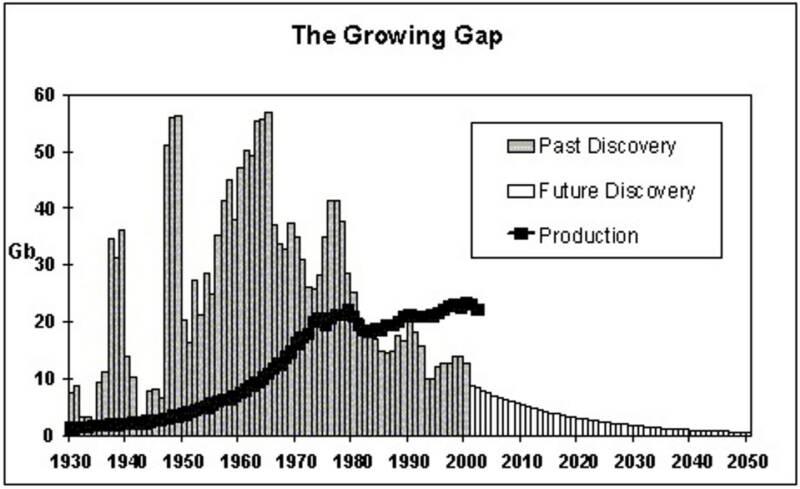
   Peak Oil is the point at which the cost of extracting oil will be so high that is will not long be possible to afford producing it.  Currently the rate of production has bee outrunning the rate of discovering of oil, meaning that we have reached peak oil or are very close to it.  This have devastating effects on our economy and daily lives since we rely on oil for practically everything from food, cloths and electricity.

Global peak oil is a very scary reality because humans relay so heavily on oil, the main sources being for energy and food production.  In the past we have relied on ingenuity and technology to solved problems that came up.  With our dependency on oil, we will need new forms of gasoline, new ways to generate electricity and energy that run our  man-made world.  Personally i don't think that we can generate the the technology fast enough to support a new way to generate the amount of energy we use that oil currently provides for us.  I think it will come down to a combination of human habitual and behavior changes with new technology.  We will need to relearn how to use less energy/oil.

The Bloomington Peak Oil Task Force is very important and will be key to keeping the city running once supplies of cheap oil stop. The task force is looking for places where Bloomington is vulnerable to declines in cheap oil ad then formulating solution strategies.  I think that Bloomington is more forward-thinking about the energy crisis then other cities because many cities do not have a Peak Oil Task Force.


Transferring to biofuels is one proposed solution to the energy crisis that I think is a viable option.  I think that we should move away from the prospect of Ethanol made with corn and utilize biofuel made from vegetable oil, animal fats and recycled grease.  There is so much grease and oil waste generated from restaurants and fast food corporations which would be collected and transformed into biodiesel.  This processed is being used at my undergraduate college.

I went to Emory University in Atlanta, Ga where all of the vegetable oil and other cooking oil waste from the University's cafeteria's are collected, turned in to biodiesel which fuel the campus buses. Below is a link to the schools website where they explain the biofuel run buses called Cliff.
Emory Biofuel Buses


I am helping out the BCOS Energy Committee and one goal of theres is to to look in to alternative energy.  I think that Bloomington should look at Emory University as an example of how to utilize biofuel has an alternative energy source. 

Monday, September 20, 2010

BCOS Energy Committee

Heidi is our main contact from the BCOS Energy Committee. Below are the three main assignments Heidi emailed us for our group to work on. The assignments are listed by importance.   

1.  Update the Energy section in the 2008 STAR report.  Currently, there are 4 indicators that the report tracks - are these the most valuable?  Are there others we could track and obtain data for that would be more useful?  What do other communities use?  In addition, we do not actually have a goal for energy consumption within STAR - it would be highly beneficial to know what other communities with like demographics have used.  Lastly, suggestions on, or creation of charts, graphs, maps etc to explain the indicators and show trends over time (2006 was the first report) is desirable.

2.  Energy Efficiency.  Our group would like to promote energy efficiency for buildings of all types.  How best to do this?  What have other communities (with limited budgets) done to get the word out about how to raise efficiency within structures?  Besides PR, what programs could the City investigate to aid (with educational resources, cost share, etc.) building owners with efficiency upgrades?

3.  Alternative Energy Generation.  Purdue has implemented a system that uses food waste from cafeterias to generate bio-gas.  I'm not sure of the feasibility here for the exact system, but what model did they follow to implement the program?  Could Bloomington do something similar with another like system?  What would be the cost-effectiveness of such a system, e.g. ROI?


Readings for Tuesday Sept. 21th

Roseland
Chapter 4: Greening the City

I have not seen too much of green and urban ecology projects in my hometown or in Bloomington, but I think that it is a great idea and holds a lot of great possibilities.  I noticed while reading that there were several "greening the city" projects and ideas that the BCOS are trying to implement.  For example the food committee is focusing on promoting community gardens, and Bloomington currently has a thriving farmer's market.  Supporting local famers is essential for a sustainable community, because it saves on packaging and transportation costs and energy use.  Another green space topic that was mentioned at the BCOS meeting was tree shading. I idea is to place trees in specific locations to provide shade, wind-breaks and transpiration.  Roseland says that utilizing location of trees in urban areas can save 20-25% on annual residential energy costs compared to unshaded areas.

It is not very noticeable in a small town like Bloomington, but in major cities such as New York or Los Angeles the heat island effect can be felt and shown.  The heat island effect is where urban areas are significantly hotter then surrounding rural areas due to so many surfaces, such as concrete, asphalt and brink that absorb the sun's heat and radiate it out.  I have had this silly idea for a solution to this problem for a while.  Most of these urban surfaces with concrete and asphalt are black which have a high albedo, absorbing a lot of heat. So my solution was what if we change all of the black concrete and asphalt to be white, which has a low albedo thus absorbing less heat, ideally reducing the heat island effect.

I learned a learn a new term that was in the reading, "bioregionalism" which is an area defined by a human population living that is governed by nature instead of legislature.    

Wheeler: 137-154

All three articles Spirn, Beatley and Riley discuss negative effects of cities. Spirn talks about the discord bitween nature and cities, Beatley talked about how cities have decreased certrain species populations and Riley is discussing how to restore nature that cities have hampered.

The article by Spirn discusses the fallacy of thinking that cities are different from nature. There would be a lot less environmental problems if if nature was in the forefront and given into consideration when building cities and especially infrastructure. We are battling the earth by creating dams and trying to move the direction of rivers, for example with the Mississippi there are some may issue with dikes and flooding because in our US history we have moved the natural run of the river.  I think that there would be less natural disasters and conflicts between nature and cities if the city was considered an entity connected to nature.  If we think like this hopefully we will see how unsustainable we have build cities and try to alter how we build and use resources.

There are several human causes for why species becomes instinct from reforestation of rainforest, clear cutting for timber and fore agricultural land and for the development of cities. Bealtley discussed the responsibility we have to maintain and restore habitats in order to protect and increase populations for endangered species.  It is difficult in policy making and environmental management to make discussions to satisfy both needs for the endangered species and human needs and to assess what is needed for the species to recover.

Riley defines ecological restoration gives examples of what is and isn't restoration.  The definition for ecological restoration that I knew was the process of intentionally altering a site to establish a defined indigenous historical ecosystem that has the goal of emulating a specified ecosystem (149).  Riley also has a another definition adding a human and social component to ecological restoration that I hadn't thought of before.  The other definition was a process of intentionally compensating for damage by humans to the biodiversity and dynamics of ecosystems by working to lead to the reestablishment of sustainable and health relationships between nature and culture (149-150).  It is good to have these two definitions because in a lot of cases ecological restoration is done to rectify humans previous actions.

Wednesday, September 15, 2010

Ecological Footprint

Using the Global Footprint Network website I calculated my ecological footprint for my current lifestyle in Bloomington
http://www.footprintnetwork.org/en/index.php/GFN/page/personal_footprint/

In my results it would take 3.8 earths for everyone to live the way I do and 16.9 global acres of the earth's productive areas to support my lifestyle.  I found this surprising because I do partake in activities that I feel should keep my footprint low. For example, I ride my bike or take the bus mostly everywhere I go, and I recycle.  The website did give me good recommendations on how to reduce my ecological footprint.  Below are some of the recommendations from the website:
- reduce my animal product consumption in half
- purchase products with less packaging or with post-consumer materials
-use the bus
-take a local vacation, to fly less

This ecological footprint test asked questions about one's lifestyle asking questions such as; about what you eat, size of your home, number of people living with you, if you drive or take the bus, utility use, what your recycle and how often you fly, drive or take the bus.  With the answers to these questions a footprint is calculated by determining how much agricultural land, energy, residential area and waste you consume by your lifestyle.  The article in the Urban Sustainable Reader has good definition of an ecological footprint, as the "total area of terrestrial ecosystem types needed continuously to support all the social ad economic activities carried out by the people of our city as they go about their daily activities" (p292).

I also calculated my Greendex from the National Geographic website
Greendex is part of a International Consumer Study, where the calculations took into account transportation, food consumption, housing, goods consumption, waste disposal, and appliance purchasing. I received a Greendex score of 65.  

The Greendex asked different questions then the ecological footprint calculator.  The Greendex asked purchasing, household appliances and energy efficient household appliances questions that the other website did not have in their survey.  

An ecological footprint relates to the concept of carrying capacity because it can be used to measure a populations current consumption and projected requirements against available ecological supply and point out where there will be short supplies.  In my results from the Global Footprint Network it said that 3.8 earths were needed for everyone to support my lifestyle, this is portraying how far over the carrying capacity we will go if everyone strives to live like me.  This way of thinking leads to an issue of environmental equity, because I don't really want to change my way of life but then it's unfair to others who are living with a lot less then myself but there are simple not enough land and resources to accommodate everyone.    

Tuesday, September 14, 2010

Bloomington Commission on Sustainability

I went to the BCOS meeting tonight at City Hall.  The commission has a lot of good endeavors they are trying to accomplish and I am excited to help out the commission and in particular my committee. I am in the energy committee, and the commission has some areas were we can assist.  The current goals of the energy committee are to analyze indicators and are focusing on energy efficiency and planting shade trees.  Also mentioned at the meeting was a possibility of  starting home energy audits and renewable energy.

It seems that the at good place we can start to help the committee is to analyze the energy sustainability indicators that were in the 2008 Sustainability Report, and then give recommendation based on our analyses.  I hope that the home energy audit program starts up because I feel I could help the committee with this initiative, because last year I worked as an AmeriCrops VISTA, generating and running a summer long youth volunteer household energy efficiency program.  During my AmerCorps year of service I worked for a non-profit organization called Volunteer Frederick.  With this summer program I hired two energy audits to supervise the youth through activities and to educate them on energy conservation and energy audits. The youth went and make energy conservation improvements to 20 homes, conducting improvements such as installing hot water heater blankets, insulating attics (with an attic hatch and by blowing insulating), outlet gaskets and CFLs.

The commissions goals for the other two committee's food and water were based off the sustainability report.  In the food committee the main focus is to understand and promote local food production.  The main goal is to reduce fossil fuels and have less transportation distance of food.  The food committee has four main objectives:
1) Survey organization and see how they promote and use local foods
2) Start a garden program.
3) analyze indicators
4)figure out how many acres are being used for agricultural production on both private and public lands

The man two focuses of the water committee:
1) Raise the rate for water as part of a water conservation program
2) increase usage of water storage at the household level and educate people on how to use water storage tanks

Another discussion at the meeting was about the Platinum Bike Task-force that is making recommendations to the city on how to make Bloomington more bike friendly.  I love this initiative because I have a bike and I would use it more but I am afraid to bike on the congested street with cars (it makes me nervous).  

Monday, September 13, 2010

Sustainability Indicators

The Sustainable Urban Reader, article by Maclaren

A critical point that Maclaren makes is that there is no single definition for urban sustainability because each community varies in location, size and dynamic causing that community to develop differently.  This is also a current issue when making state and national policies. It's hard to establish proper ruling that covers so many varying situations. Since there is no set definition for communities to uphold, Maclaren has formulated key urban sustainability indicators to keep communities on the right track.  All urban sustainable indicators are integrating, forward-looking, distributional and developed with input from multiple stakeholder in the community.  The Bloomington Commission on Sustainability (BCOS) generates annual Bloomington Sustainability Assessment Reports, describing sustainability indicators.  In the 2008 report one sustainability indicator was the tons of solid waste recycled.  Maclaren would classify this as an integrating indicator because it portrays linkages across more then one dimension, social, economic and environmental.  In the BCOS report from 2005-2007 the tonnage of solid waste that is being recycled has leveled off.  It is good that recycling hasn't declined but we should always be trying to recycle more to reduce that amount of waste that goes into landfills.  The fact that recycling has leveled off int eh past 3 years is a sustainability indicator that maybe Bloomington should starts some forward-think, look into the reasons why recycling has leveled off and try to implement actions to increase recycling.

I live in the Fountain Park Apartments off of 10th street and my complex doesn't recycle glass. This is the community policy that I would like to change because since everything else is being recycled (plastic, paper, cardboard and aluminum) it shouldn't be any harder to have glass get recycled.  I think that a policy standard should be placed in effect by the local government, whereby all apartment complexes in Bloomington should be required to recycle (including glass).

I am still trying to devise my own definition of a sustainable community but while I was looking at the Bloomington Sustainability website I found their definition of a sustainable community and really like it. In the Bloomington Commission for Sustainability Ordinance the definition for sustainable community was: "to enhance the socio-environmental-economic well being of the community while taking precautions not to compromise the quality of life of future generations. Towards that end, it reduces its use of on-renewabe resources and its production of wastes, while at the same time improving livability. "

Saturday, September 11, 2010

Low Carbon Diet

From Thursday's class discussion I thought of a relevant book that you all may find interesting.  The book is titled "Low Carbon Diet: A 30 day plan to lose 5000 pounds" by David Gershon.  This book relates to our class discussion on climate change and  how the push for sustainable development can come from individuals, a bottom-up approach to making national changes.  The Low Carbon Diet is a guide that tell you step-by-step how to reduce your carbon dioxide output.  The book informs you that by making changes and taking actions in your everyday life you can reduce your annual household CO2 output by 15%. The goal of the book is to show how the collective actions of individuals can have huge impacts.  The Low Carbon Diet tells the individual how to reduce household CO2 emissions and then instructs the individual on how to motivate and have others in their community take actions to reduce carbon emissions. This book related to our class because it's one example of how to make a community more sustainable.

Here is the link for the Low Carbon Diet website: http://www.empowermentinstitute.net/lcd/
The author, David Gershon has written other books on the same topic, of reducing carbon emissions, sustainability and community mobilization.


Another book that David Gershon has written that fits into your class discussions is the "Green Living Handbook." This book instructs you how to have a environmentally sustainable lifestyle, and then to spread that your learned to your community.  


Wednesday, September 8, 2010

Week 2.2

Thoughts on readings:
1) What struck me as most interesting was the article by McKibben, where he talked about Arrhenius predicting the effects of man's production of carbon dioxide and how it would alter global temperature.  Arrhenius around 1884, predicated that the average global temperature would rise by around 9 degrees F if the amount of carbon dioxide in the air doubled from its preindustrial level.  I think that the majority of people view the  issues of excess carbon dioxide in the atmosphere, how this will negatively affect the earth and the theories of global warming that relatively new, from the 21th century.  But after reading this article I realize that since the late 1800's early 1900's people have noted the increasing release of CO2 into the atmosphere.  

2) when reading over the United Nations document on sustainable development there were a few principles that i questioned why they were there. For example principle 20 "women have a vital role in environmental management and development. There full participation is therefore essential to achieve sustainable development" (75).  I was wondering why they singled out women and not just wrote all people. 


Brundtland Commission:
  The Brundtland Commission defines Sustainable Development as development that meets the needs of the present without compromising the ability of future generations to meet their own needs. The Commission's statement explains the current situation of the world, why we all need to work together towards sustainable development, and gives recommendations on how to more towards sustainability.  In the statement the Commission writes, “The Earth is one but the world is not.” What this sentence is saying is that, the World is being attributed to all the different countries, states, cities and communities that inhabit the world.  While Earth is just the one planet that humanity lives on. 
  One of the issues that makes people's way of life unsustainable is that we are degrading the environment.  Both the wealthy and the poor degrade and pollute the environment. For example, people who are poor often destroy their immediate environmental in order to get food and survive.  Some examples of environmental damaging actions are deforestation, overgrazing grassland with livestock and over use of marginal land.  At the end of the article the Commission gives recommendations on how renewable and nonrenewable resources should be used.  Renewable resources should not be depleted; such resources include forests, and fish stocks. The use of renewable resources should be regulated to insure the rate of use is within the limits of the resources regeneration and natural growth.  For nonrenewable resources the commission recommends rate of use and depletion should take in to account the criticality of the resources, availability and likelihood of substitutes being available.

McKibben:
   This article discussed that due to humans actions we are causing increasingly amounts of carbon dioxide to release into the earth's atmosphere, which are causing negatives effects, the main one being causing the temperature of earth to rise.  The atmosphere needs carbon dioxide but not a the rate that we are putting it in tot he system, we are disrupting the balance of nature and the percentages of atmospheric gases by filling the air with carbon dioxide and methane. Earth is inhabitable due to the greenhouse effect. The greenhouse effect is the rise in temperature of the earth experiences due to atmospheric gases (water vapor,  methane, carbon dioxide and nitrous oxide) trap energy from the sun. Due to the greenhouse effect we have lives comfortably, but this same mechanism will cause earth's temperature to rise to abnormal temperatures due to excess carbon dioxide.  It was thought that oceans could act as a sink to absorb the carbon dioxide, but actually the upper layer of oceans where the air and sea meet, absorb little of the excess carbon dioxide produced by man.

http://www.billmckibben.com/eaarth/fromtheendofnaturetoeaarth.html
  Before the Industrial Revolution the atmosphere contained around 280ppm (part per million) or Carbon Dioxide.  The safe limit of Carbon Dioxide in the atmosphere is 35ppm. The scary fact is that currently there are 390ppm of Carbon Dioxide in our atmosphere and that is increasing!!


In Indiana the largest Carbon Dioxide fuel production comes from coal.


The way in which people eat can affect climate change.  Eating higher on the food chain, such things as chicken, cows, or pork can affect climate change.   For example the cows release a lot of methane through flatulence and defecation.  Methane is a green house gas like carbon dioxide. As more livestock are being raised so people can eat meat, more methane is being released that is adding to the causes of climate change. 

 Rio Declaration:


    Principle 7 of the Rio Declaration in regards to global environmental degradation states that "states have common but differentiated responsibilities."  For the United States this will mean working towards sustainable development, and utilizing the technology and financial resources we have to prevent environmental degradation. Principle 13 could be called the "polluter pays" principle, since it declares that states need to establish laws regarding liability and compensation for victims of pollution.  The Declaration had three separate principles about how women, youth and indigenous people have vital roles in sustainable development.  Personally I think it was odd to single out women into it's own principles, and I don't see how women can help promote sustainable development and more then men. I think it was good to highlight  the youth and indigenous people because it shows that it it not just the policy makers who will be leading others towards sustainable development, that everyone from all areas and age are essential to shift our way of life.  Principle 25 says that “Peace, development and environmental protection are interdependent and indivisible.” I think that this statement is meaning that peace, development and environmental protection are all needed for sustainable development and we will not reach sustainable development if one of those is missing.  
    In the Millennium Declaration, globalization is viewed as being unevenly shared, where by resources and wealth are being distributed.  The goal in the Millennium Declaration was to recognize the counties that are facing economic difficulties and send help and utilize globalization to establish peace and have globalization be a positive force.  The declaration highlights six values to be essential for international relations; they are freedom, equality, solidarity, tolerance, respect for nature and shared responsibility.  I agree with all of these values, I also think that generosity is another important value that could be added to the list. Northern cities, in particular the United States suffer from growthmania and greed, we keep wanting to consume. To move towards sustainability we need to become less greedy and give more then we take.  I feel that principles 7, 8,9,11,13,15,17, and 25 are the most essential proposed measurable objectives.  I think that the most achievable objective is principle 15, which states that the precautionary approach should be widely applied by states.     

Tuesday, September 7, 2010

Towards Sustainable Communities Chapter 2


1) A point that Roseland makes that thought was important was looking at the city at a whole and analyzing how energy is being brought into the city, how that energy is being used.  A large amount to energy is being used just to bring the energy to cities, because people don't want to live next to a coal or nuclear power plant.  For urban sustainable development the way in which energy and pollution move through a city is important to study and then try to reorganize to make it more efficient.  

2) I found the map of Berkley California hard to decipher.  As the years progressed I lost track of where the circles should be. I think the point would have been clearer if the circles from the first map were drawn on the following three maps.

Roseland:

   Roseland defines sustainable communities as a "continually adjusting to meet the social and economic needs of its residents while preserving the environment's ability to support it."
   Over half of the world population lives in cities, this transformation has positive and negatives. The positive implication that Roseland points out is that cities provide opportunities to solve environmental challengers and will be the pioneers to new approaches in sustainable development and community management.  The negatives of so many people is cities, is the accumulation of pollution, waste and more resources and energy are needed.  Roseland views Northern cities as being unsustainable and southern cities as being underdeveloped.  Northern cities are having a larger impact on the environment then southern cities, making is more critical for northern cities to strive toward sustainable development.
    In North America, cities were form with the assumption that abundant and cheap energy and land would be available forever. This assumption effected how cities were built, and resulting in all cities being made to be car-dependent.  Back with coal was abundant and cheap lots of streets and cars were main, but mass transportation in the form of trolleys, subways and busses were underdeveloped. Another feature of the city that formed with the assumption that energy and land are abundant is that urban cities are sprawling.  This can be seen in Indianapolis and Bloomington where the areas that used to be farm land are turning in to suburbs.
  North American cities ecological footprints are around 7 times larger then those in Asian and African countries, and double the footprint of Europe.  If other cities has similar ecological footprints to North American cities, we would need another earth to support the world population.  Is there simply not enough food,water and land for everyone to live in the way North Americans do.  The fact that American's consume more and use up more resources is a major social equity issue.


Sustainable Urban Reader through pg. 58

Readings:
1.) From the reading, I learned a new term that was interesting, "growthmania".  Growthmania being the "mind-set that always puts growth in first place- the attitude that there is no such thing as enough that cannot conceive of too much of a good thing" (54).  I do that that many Americans are victims of this wish such examples of hummers, huge mansions, and having three cars for one family.  The mentality (or greed) to keep consuming is very hard to combat when we should be conserving and down sizing.

2.)  I would like some clarification on the except from the "Introduction to the limits to growth" by Meadows and how they found their conclusions.  

McHarg:
   McHarg has  a negative view of cities, describing them has gray prisons will pollution and poverty. For his point of view cities and their suburbs keep growing and expanding out ward that the countryside can no longer be found because the suburbs are becoming the countryside.  McHarg conducts a study on land usage sectioning the land into eight natural processes which perform work, or benefit man.  The eight natural processes are surface water, marches, floodplains, aquifers, aquifer recharge areas, prime agricultural land, forests and woodlands. Understanding these natural process and their location is very beneficial for city planners.  In this way we could build city features in areas that will not detriment natural processes.  If we fully understood the natural processes of floodplains for example we could a have avoided the environmental and city issues with New Orleans and Baton Rogue.  These two cities have been build very close to flood plains and even with science and engineering ingenuity there are still homes getting ruined due to floods and the environment being negatively altered from man-made dikes.
    Of the authors we have read so far I think that McHarg's are closest to Lewis Mumford.  Both authors have a negative outlook of cities and describe their problems related to the environment, wastefulness and unsustainable.

Frank:
  It was interested reading an except by Frank because he gave a different perspective from a non-capitol developing country standpoint.  Frank explains that in developing countries the main efforts of development after World Ward II, weakened ties with active capitalist involution leading to less autonomous development or industrialization.  Frank attributes the weakening ties to the metropolis-satellite chain mechanism. This metropolis-satellite chain in the world capitalist system results in increasing international inequality of incomes.

Meadows:
   Meadows conducted a study, generating a world model investigating five major trends of global concern: accelerating industrialization, raid population growth, widespread malnutrition depletion of nonrenewable resources, and deterioration of the environment.  Using these trends the model was to predict and project how these trends will effect the future.  This was the first model done on such a large scale. The world model study had three main conclusions.  First was that if growth trend remain unchanged then the limits to growth on earth will be reached within the next 100 years. Second, is that is is possible to alter the growth trends and gain a stable economic and ecological future.  The third conclusion was that the sooner people work towards stability in our population and economy the greater the changes of success.
    Meadows also did a human study on people's perspectives and concerns.  The result of the study showed that people have lot more concern for their family and local issues then for global, or future issues.  Since people are more focused on the current well-being of themselves and their family, it is hard to gain support for worldly issues such as climate change and environmental degradation.  A strategy to promote support and public concern for environmental and sustainability issues is to relate the problems to the present and how it will effect people and their families currently.

Daly:
   Daly has formulated two terms Growthmania and hyper-growthmania, to express the mind-set of people to keep wanting more and cannot conceive of too much of a good thing.  The two terms connect to the GNP people the greedy mind-set of people is fueling the GNP.
   Daly defines a steady state economy in which the total population and the stock of physical wealth are maintained constant.  We should be striving for a steady state economy because we cannot continue to grow infinitely. To reach a steady-state economy Daly proposes limits to consumption and setting maximums and minimum limits on wealth and income. The main barrier to the transformation to a steady state economy is changing the behavior and morals of our consumeristic society.

Discussion Questions

The Sustainable Urban Reader: Through page 38

1) What struck you as the most important, interesting, or relevant concept you read? Why?

  I thought that article by Mumford was very interesting, in particular the part where he discusses the reasoning behind the downfall of cities.  Mumford states that the main reason that cities turned into chaos is that physical organization and mechanical technologies have increased but social organizations and civic associations could not keep up. This lead to metropolitan slim, industrial factor districts with social derangement (20). I feel that some cities today have this same issues Mumford is discussing, in particular very industrial cities and cities with urban sprawl.  This highlights the social aspect of sustainable development. 

In the article by Leopold, his land ethic is very important and inspirational. One importance piece of the "land ethic", is that it's not enough to take care of the land so you can continue to reap it's benefits; but the land has inherit beauty and should be regarded in it own not just as a means to gather resources.  

2) Are there any topics discussed that were unclear to you or you feel need further illumination?

In the article by Mumford the author at the end asks several very important questions, but Mumford does not answer the questions.  The questions are "have we yet found an adequate urban form to harness all the complex technical and social forces in our civilization; ...what steps are necessary in order to redefine and reconstruct the region itself, as a collective human habitation? (22). I thing theses questions go into urban sustainable development. I would like to go into more details on the question and discuss some possible answers. 

3) Howard's Garden City complex was one of 250,000 population in a circle 10 miles in diameter with a central city and six ringed residential centers all linked by boulevards, canals and rail lines. How would your ideal sustainable city plan differ from his? Does the "garden city" concept relate to Bloomington today? How?


Howard's Garden City focused on separation and there was not much connection between the different rings (circles) to his city.  Once issue I have with his city plan is the placement of undesirable populations.  Howard places undesirable populations on the outer rings of the city, in isolation and away from all the resources are are being brought in to the city.  Here is an issue of social equity, and in my sustainable city plan I would not have those people isolated outside the center city.  

4) What was Mumford refering to when he contrasted a "cult of life" with a "cult of death?"

Cult of death is the lack of social capitol, interpersonal, overconsumption.  The Cult of life is the opposite and has lots of social capitol.

5) What is the "land ethic" of Aldo Leopold? Do you agree with this philosophy?

The idea of Aldo Leopold's Land Ethic is that people should think of the land as more then just one's property. We should think more highly of land and respect it.  I agree with Leopold's philosophy and think that the environment should not just be looked at in the terms of how it is beneficial to human growth and survival. I think that nature has inherent value and should be respected and conserved, for the land and for all of the it's wildlife/inhabitants.  

How did Leopold equate the hanging of slave girls on a single rope by Odysseus to our relationship to land?

Odysseus owned the slave girls, they were regarded as his property.  Leopold relates Odysseus' slave girls to the land by saying, people regard the land as property. People own land and can do what they want to the land, just as Odysseus can do what he wants with his slaves.

6) How did Jane Jacobs connect bloodletting and modern urban redevelopment?


Jacobs connected bloodletting and modern urban redevelopment to point out that we do not know much about urban redevelopment.  We are experimenting with urban redevelopment and working with different theories, just as our ancestors conducted bloodletting because they did not know much about the human body or medicine.   Also modern urban redevelopment is a new concept that is just being formed and will change over time, just as bloodletting changed and stopped as science and medicine advanced.    


Sustainable Communities: Chapter 1
1) What struck you as the most important, interesting, or relevant concept you read? Why?

What I thought was most interesting and thought provoking was the question Roseland posed "are we capable of knowing the full costs and benefits of destroying or conserving natural capitol stock? (6).  We know that the earth's ecological systems, and natural resources are important, but is there a quantifiable amount to them?  Since people in general are ruled by money, I feel that placing prices on natural capitol stocks will show people how valuable they are, how we cannot deplete them so rapidly and with out consideration for our future.   

2) Are any topics discussed that were unclear to you or you feel need further illumination?

I was a little unclear about figure 1 on page 13.  I would have liked to have a more detailed explanation about how the different forms of capital correlate and effect each other.