
What is Peak Oil?
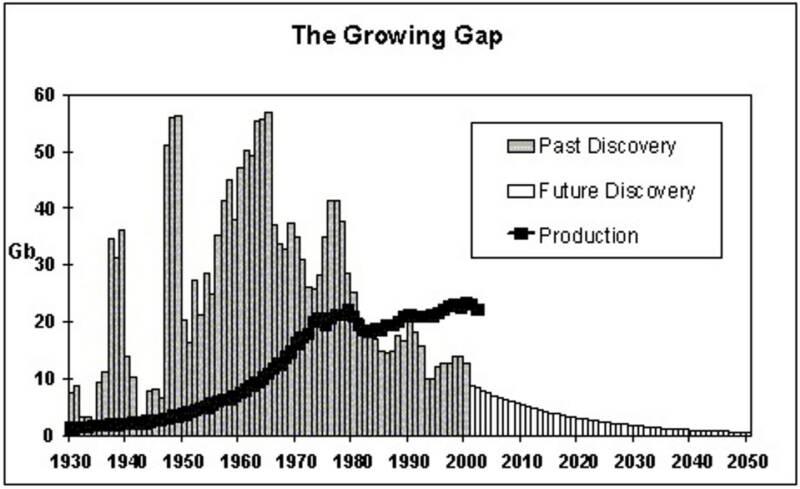
Peak Oil is the point at which the cost of extracting oil will be so high that is will not long be possible to afford producing it. Currently the rate of production has bee outrunning the rate of discovering of oil, meaning that we have reached peak oil or are very close to it. This have devastating effects on our economy and daily lives since we rely on oil for practically everything from food, cloths and electricity.
Global peak oil is a very scary reality because humans relay so heavily on oil, the main sources being for energy and food production. In the past we have relied on ingenuity and technology to solved problems that came up. With our dependency on oil, we will need new forms of gasoline, new ways to generate electricity and energy that run our man-made world. Personally i don't think that we can generate the the technology fast enough to support a new way to generate the amount of energy we use that oil currently provides for us. I think it will come down to a combination of human habitual and behavior changes with new technology. We will need to relearn how to use less energy/oil.
The Bloomington Peak Oil Task Force is very important and will be key to keeping the city running once supplies of cheap oil stop. The task force is looking for places where Bloomington is vulnerable to declines in cheap oil ad then formulating solution strategies. I think that Bloomington is more forward-thinking about the energy crisis then other cities because many cities do not have a Peak Oil Task Force.
Transferring to biofuels is one proposed solution to the energy crisis that I think is a viable option. I think that we should move away from the prospect of Ethanol made with corn and utilize biofuel made from vegetable oil, animal fats and recycled grease. There is so much grease and oil waste generated from restaurants and fast food corporations which would be collected and transformed into biodiesel. This processed is being used at my undergraduate college.
I went to Emory University in Atlanta, Ga where all of the vegetable oil and other cooking oil waste from the University's cafeteria's are collected, turned in to biodiesel which fuel the campus buses. Below is a link to the schools website where they explain the biofuel run buses called Cliff.
Emory Biofuel Buses


I am helping out the BCOS Energy Committee and one goal of theres is to to look in to alternative energy. I think that Bloomington should look at Emory University as an example of how to utilize biofuel has an alternative energy source.

Were the buses able to run entirely on oil from the campus itself, or did they have to get an outside source as well. If Bloomington isn't willing or does not have enough oil, do you think IU might be able to make their own biodiesel from the cafeterias?
ReplyDeleteFun fact about the biodiesel shuttles at Emory: There was controversy when Clairmont Campus (a residential satellite not far from main campus) was built because they wanted to build a bridge through a forested, undeveloped area to connect Clairmont to the campus. The traffic and development disturb the wildlife and this natural area. People protested this so as a compromise they only let shuttles that ran on biodiesel travel on the bridge.
ReplyDeleteThe buses are run to oil from the campus and nearby resturants to acuire the means for generating biofuel. I do think that IU would be able to make ther own biodiesel. IU being such as large school and with several cafeterias, combinging all that oil would make a sustantial amount of biofuel. IU should be very willing to give up the oil because usually resturants and universities have to pay a company to come remove thier waste oil.
ReplyDelete